
18 February 2023
An Introduction to Gothic: Additional Reading
An Introduction to Gothic Architecture at Saint Cecilia’s Church

ADDITIONAL READING
AUGUSTUS PUGIN, The True Principles of Christian Architecture
Two lectures which set forth Pugin’s views on the relationship of Catholic Liturgy and Gothic Architecture.
Built of Living Stones: Art, Architecture, and Worship: Guidelines of the National Conference of Catholic Bishops.

04 February 2023
07 January 2023
Some Thoughts on Epiphany

I’ve never been more terrified. Every three year old knows how I felt…pulling the covers up to my neck in hopes that the witch and the monster I could hear in the closet were going to carry me away or eat me or make me scream. And while they always went away in the morning, when the light came on, in the dark they always had the advantage.
Like when I was young priest, standing by the bed of the old man who was not going gently into that good night. Actually, he was cursing and swearing at everything with a vehemence as scary and as loud, as it was desperate. And I stood petrified, as I stared in the face of pure darkness and trembled before shouts of renunciation, professions of faithlessness, and an abject rejection of God. It had never seemed so dark.
Except when I met the guy whose wife asked him for a divorce and told him she didn’t love him anymore. He tried to reason that it was their son’s addiction, or their daughter’s unwed pregnancy, but he knew the darkness that was destroying their marriage was somehow leaking out of his own heart. He’d stopped praying a long time ago and only went to Church when there were lilies or poinsettias. He’d thought he plotted his own path for so long, but now he was lost in the dark, the dark that was in front and behind and beneath and all around him. Lost in the dark.
Like a magus (singular of magi), wandering over hill and dale with all those camels and gifts, lost in the middle of the night. All six of them: Gaspar, Melchior, Balthazar, the guy with the broken marriage, the young priest and the kid with the closet…all wandering through the dark night of the soul, looking for the star that rises in the East, for the morning star of our salvation and the refulgence of the Father’s glory.
Their journey to the manger in Bethlehem was what our beloved Pope emeritus called the “beginning of a great procession which winds throughout history.”1
It is our procession, through all the dark nights of our lives: a never ending struggle between the dark deceptions of Satan, with all his pomps and phantasms and the blinding love of God who rises in the East with healing in his wings.
So, listen to me, every little kid afraid of the dark: you never have to be afraid, ever again! For the Baby Jesus, who was born for you in the manger has destroyed all the monsters and witches and banished the darkness in which they hid. Never again need you be afraid of the dark, for it is ever but a prelude to the coming of his light and the fullness of his glory.
Listen to me, every old man on the brink of death: you never have to be afraid ever again! For he who was born in a manger in the shadow of a cross upon which he offered his last breath for your salvation, in his dying has destroyed all death. And he has promised that those who eat his Body and drink his Blood will never really die at all, but will rise with him to eternal life.
And listen to me, you who are so lost in the dark that you cannot find your way, I say: you never have to be afraid, ever again! Follow the Magi in this great procession of humanity to Jesus Christ, to the God who was born in a stable, who died on the Cross and who, having risen from the dead, remains with us always, until the consummation of the world.”2 Follow him and him alone and you will know the peace the world cannot give, until you come to love in perfect light with him who the light for ever.
“Arise, shine; for your light has come,
and the glory of the Lord
has risen upon you.”3
_________________________________________
1 - Pope Benedict XVI, Epiphany Homily, 2013.
2 - Pope Benedict XVI, Epiphany Homily, 2012; cf. Mt 28:20.
3 - Isaiah 60:1.
05 January 2023
Solemnity of the Holy Mother of God

I noticed something different when praying about this Gospel a few weeks ago. Did you hear what actually happened in it?
The story starts right after the angels have appeared to the Shepherds, and so, Saint Luke tells us, they “went in haste to Bethlehem and found Mary and Joseph, and the infant lying in the manger.”
So, step one: the shepherds arrive at the manger. Then he tells us, once they had seen the child for themselves, they ran away as fast as they had arrive…telling everyone that they had seen the child, which the angels had told them was the Messiah.
You can picture the shepherds, running around the town, banging on doors and awaking everyone up, telling them that the Messiah was in a manger. “All who heard it were amazed ,” Saint Luke tells us.
So, the shepherds are really the first evangelists, spreading the good news the the Lord has come to his people to set them free.
——
Almost by contrast, Mary remains in the manger, and does two things. First, she “keeps all these things in her heard” and second, so “reflects on them.”
First, what are “these things.” And here is what just occurred to me. When the shepherds arrived at the manger, I am sure they told Mary and Joseph what the angels told them. How their first words were the same as Gabriel spoke to the Virgin at her annunciation: Don’t be afraid! It’s kind of a natural thing for angels to say when people see the bright lights and the glory for eh Lord surrounding them.
But then they would have repeated the new that the angels brought “good news of great joy….for all the people,” that
“today in the city of David a savior has been born for you who is Messiah and Lord. And this will be a sign for you: you will find an infant wrapped in swaddling clothes and lying in a manger.”
So Mary is silently thinking about how she fits into these incredible events, and what it all means.
The original Greek word for what Mary was doing is sumbállousa, which literally means to try to put something together, like a puzzle. She had been given one piece of the puzzle by Gabriel, who told her that she would conceive a child in her womb by the holy spirit and she would name him Jesus, the Son of the Most High, who will rule over David’s house forever. And that he would be called holy, the Son of God.” And now the shepherds give her several other peeves to the puzzle: the baby she holds in her arms in the Messiah.
As our beloved Pope emeritus described it:
Although the Child lying in a manger looks like all the children of the world, at the same time he is totally different: he is the Son of God, he is God, true God and true man. This mystery - the Incarnation of the Word and the divine Motherhood of Mary - is great and certainly far from easy to understand with the human mind alone.
Like Mary, we ponder these things in our hearts. With our eyes we see a weak little baby, but with our hearts we embrace the Son of God, the one through whom the universe was made and who has come to set us free from sin and teach us how to love.
24 December 2022
A Christmas Homily

Did you see the manger back there. It’s just beyond the forest, in the clearing between the trees.
It really does look beautiful. Almost as beautiful as that night in Bethlehem.
That night when a young virgin on the back of a donkey was led by her aged husband to Bethlehem, so he could sign up for the Roman census. And, as you just heard, they could not find a place to stay, so they ended up in a stable, gathered around a manger.
Manger is a funny kind of word, for it exists only in the Gospel. It literally means a feed box (mangé), as a contemporary translation of Saint Luke reminds us: “she had her first baby and laid him in a feed box because there was no room for them in the place where travelers stayed.”
Being born in a manger was probably dirty and smelly and far from as comfortable as a bed. Plus it was on the outskirts of one of the most out of the way towns in Galilee, at a time when mothers and their children frequently died during childbirth, even in the most hygienic of settings (which this stable was not).
Galilee in the time of Jesus was a place of sickness and disease, trying desperately to recover from an epidemic of tuberculosis.
So why of all the times and all the places in the long history of the world, did God choose a stinking animal stable in a disease infested backwater as the birthplace of his Son?
And therein lies the mystery of this night. For he came because he loves us, in all our stinkiness and disease infested littleness. He came because he loves us not in our brilliance or our sanctity, our accomplishments or our power, but in our brokenness and in our littleness. He loves us.
For on this night that weak little child in the crib takes up our littleness, our brokenness and our fears and carries them to the Cross, where he joins them to his own flesh and offers them up in a pure sacrifice of love
As the prayer says tonight: “he humbled himself to share in our humanity, that we may share in his divinity.”
He came to feel in his own heart the same betrayals which have so many times broken yours,
He came to tremble in the face of death, the way you have by the grave or the hospital bed of one you loved,
He came to know the humiliation of falling down just like you,
He came to weep the same tears that streamed down your cheeks,
He came to bleed with the same blood that flows through your veins,
As he touched with human hands, thought with a human mind, acted with a human will and loved with a human heart, just like yours.
In the words of a great mystic:
“He who was invulnerable asked to…feel cold and heat, hunger and thirst, weakness and pain.
He who…made all things asked to be poor…
He who was entirely sufficient to himself, asked…for a heart that might be broken.”
And therein lies the definition of love and the definition of this night: that it is not in our greatness or our power or our successes that we find the meaning of life. But in being little, obedient and loving…
Like the baby in the crib and the man on the Cross.
O come, let us adore him!
11 December 2022
Patience and Waiting in Hope

Billy was only five years old and the hardest thing about life for him was patience. He had none. Especially when it came to Christmas and that great big box under the tree that had his name on it.
He tried shaking it when his mother was making the brownies, and even kicked it a few times to see if he could hear a puppy inside. He knew it was something incredible, because his father had told him that Santa Claus had dropped it off early…you know how busy he gets on Christmas Eve.
But it was driving him crazy to find out what was on the inside of the big red and green box with the outsized bow and his name written in even bigger letters: B-I-L-L-Y.
it was all he could think about as he fell asleep, because he knew there was something wonderful inside there, and he even thought of running downstairs in the middle of the night and then telling his mom and dad that a burglar must have broken in and opened his gift from Santa Claus…but even at five years old he knew they would never believe him.
So he waited and waited and waited for Christmas to come.
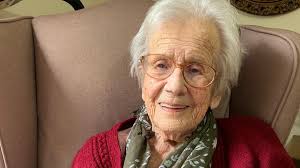
Julie-Ann was a little older. She was eighty-seven, and the hardest thing about life for her was patience. Her life, it seemed has become, as of late, a never ending series of doctors’ appointments, procedures (she found that word amusing), referrals, more doctors, bedrest, new brightly colored medicines and all the other things that come with getting old.
She just wanted to get better, or at least not to feel the aches and pains that seemed to fill her days…a new one coming along every week or so. She was amused by the fact that she now had things hurt that sge never knew she had before.
And it was so hard to be patient. Especially since it had been almost ten years since John died, and on most days she just longed to be with him again and with Jesus and his Blessed Mother and Saint Therese, her favorite Saint.
The waiting was hardest when she went to bed. That’s when she felt most alone, her heart aching for that day when she could just go home to heaven.
It’s hard to be patient. For patience is only possible for one who hopes…in the wonder of the gift that’s still all wrapped up, and the promise of that day when we will see it all face to face, when this veil of tears and this agony of waiting will pass, and the Lord will take us hone.
And we wait with patience and with hope because we know it to be true:
That every desert will bloom,
And the steppes will rejoice.
That he will strengthen the hands of the feeble,
and make firm the knees that are weak.
That he will bring peace to the hearts that are frightened
and open the eyes of the blind.
That the deaf will hear and the lame will leap like the stag,
That the tongue of the mute will sing with everlasting joy;
and sorrow or mourning will never be again.
And so we wait, with patience and hope.
Like the little boy and the old lady,
we wait in joyful hope,
for the coming of our Lord Jesus Christ!
Subscribe to:
Posts (Atom)